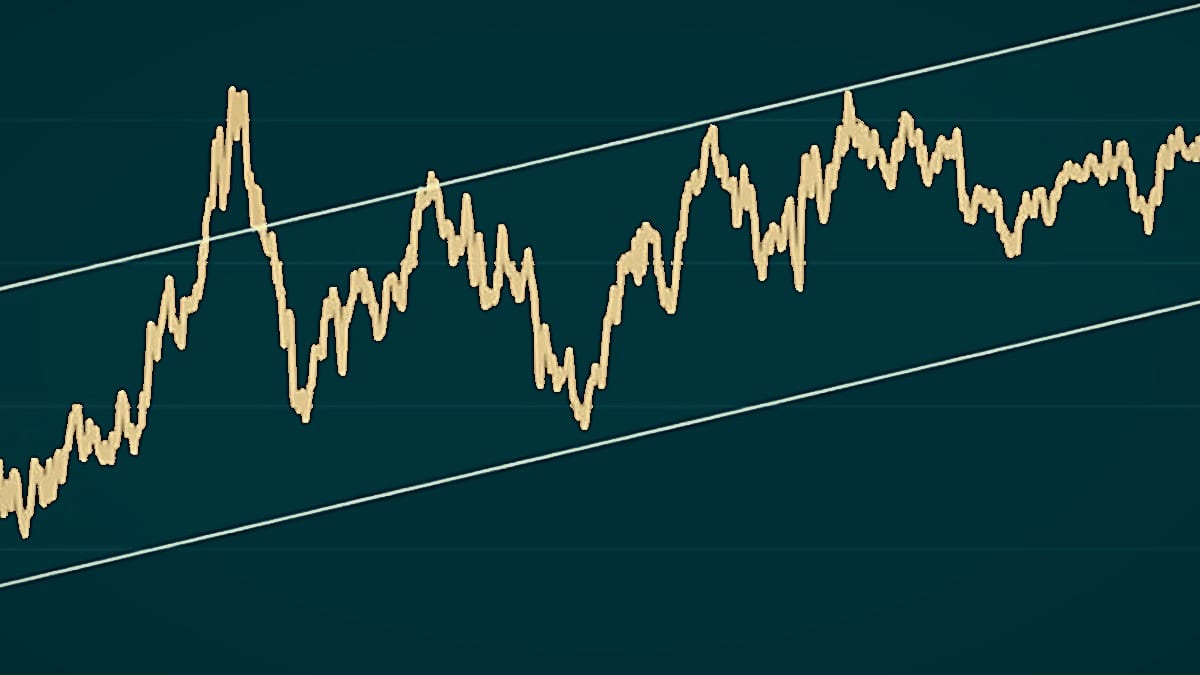
The US Dollar remains firmly supported in 2026 as interest-rate differentials continue to shape global currency markets. The Euro has emerged as the weakest major currency against the Dollar, Sterling has demonstrated greater resilience, the Chinese Yuan has appreciated despite weak domestic markets, and the Japanese Yen remains historically weak.
The Dollar Index stands at 102.34, slightly above its long-term 100 level. The Federal Funds Rate remains at 4.25%, compared with an ECB rate of 2.70%, creating a 155-basis-point differential that continues to support demand for the Dollar.
The Dollar's strength is particularly evident against the Euro. EUR/USD trades at 1.1182, down 4.80% year-to-date and close to its 52-week low of 1.1153 reached on October 12.
The pair has fallen approximately 740 pips from its January high of 1.2081. The move reflects the widening monetary policy gap between the Federal Reserve and ECB, alongside weaker Eurozone growth prospects and continued French fiscal uncertainty.
Sterling has been more resilient. GBP/USD stands at 1.3237, down 1.62% year-to-date, considerably less than the Euro's decline.
EUR/GBP has fallen to 0.8448 and reached a fresh 52-week low in the latest session, confirming Sterling's relative outperformance against the Euro. The Pound's resilience reflects the Bank of England's comparatively hawkish stance as UK inflation remains more persistent than in the Eurozone.
The Chinese Yuan presents one of the more notable currency developments of 2026. USD/CNY trades at 6.6943, meaning the Yuan has appreciated approximately 4.2% against the Dollar this year, despite China's weak equity performance and deflationary domestic environment.
The offshore and onshore exchange rates remain closely aligned, suggesting limited capital-flow pressure. The PBOC's management of the currency, China's current-account surplus, and efforts to avoid perceptions of competitive devaluation continue to support the Yuan.
The Japanese Yen remains historically weak despite the Bank of Japan's gradual normalization of monetary policy. USD/JPY trades at 157.86, leaving the Yen broadly unchanged against the Dollar year-to-date but masking substantial volatility throughout 2026.
The pair reached 163.99 in July before reversing sharply. With the Bank of Japan's policy rate at 1.25% compared with the Federal Reserve's 4.25%, the interest-rate differential continues to keep USD/JPY structurally elevated.
The weak Yen remains supportive for Japanese exporters and has contributed to the Nikkei's strong equity-market performance, while simultaneously increasing costs for Japanese consumers and importers.