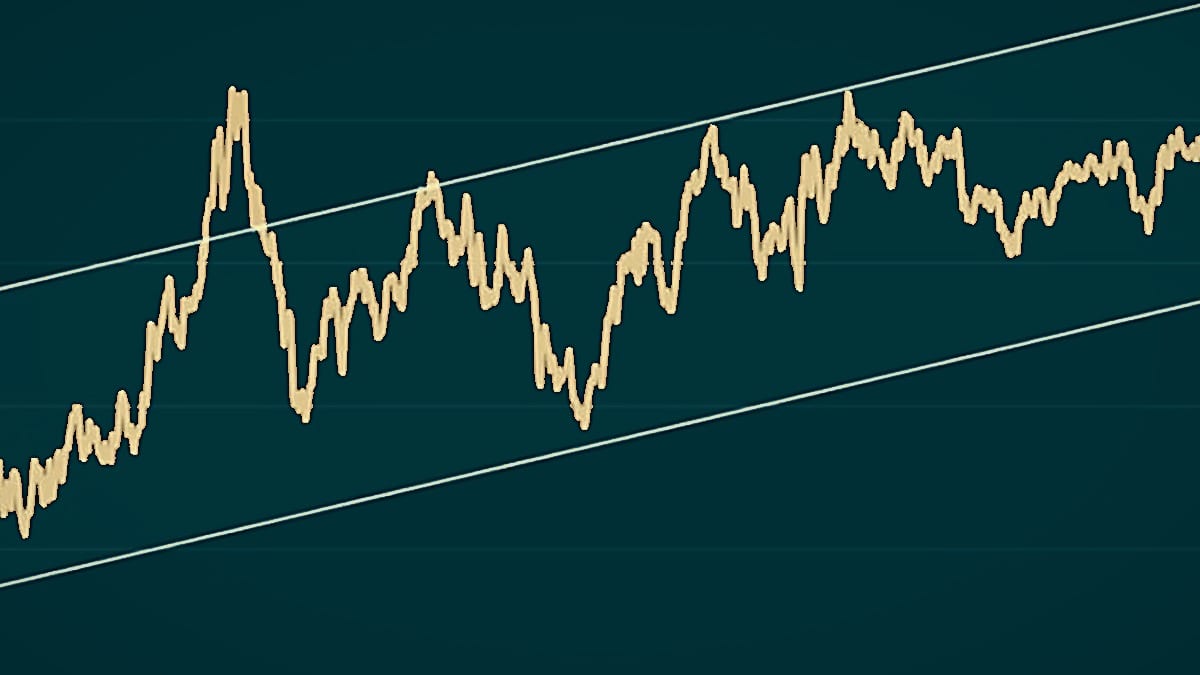
The US Dollar strengthened over the week as hawkish comments from Fed Chair Kevin Warsh triggered a sharp repricing of interest rate expectations and widened the rate differential between the United States and other major economies.
The Dollar Index gained 0.80% over the week to close at 99.702, up from 98.915. The move developed in two distinct phases. Early in the week, the Dollar remained under pressure following Treasury Secretary Bessent's intervention to support the bond market, which had weighed on sentiment toward the currency.
Positioning began to change ahead of Warsh's Jackson Hole speech, with traders increasing hedges against further Dollar strength. The catalyst arrived on Friday, when Warsh warned that inflation was not meaningfully slowing and that the Federal Reserve still had "work to do."
Following his comments, the probability of a 25-basis-point September rate increase jumped to 59.5% from 35.4% the previous day. The resulting rise in short-term US yields widened interest rate differentials and drove broad Dollar strength across both G10 and emerging-market currencies.
The Euro declined 0.77% against the Dollar over the week, with EUR/USD ending at 1.1585. Most of the move occurred on Friday. Earlier in the week, the currency had received support from hawkish comments by ECB Executive Board member Isabel Schnabel, who indicated that rates need to rise further and that inflation is likely to remain above 2% for an extended period.
The subsequent Dollar rally overwhelmed that support. Against Sterling, however, the Euro was essentially unchanged, while its movement against the Swiss Franc was also limited.
Sterling declined 0.81% against the Dollar to 1.3538, making it the weakest of the G3 currencies against the Greenback during the week. The Pound had initially performed well as markets increased expectations for Bank of England tightening, with approximately 30 basis points of additional increases priced by year-end.
Those gains were erased following Friday's Dollar surge. The 10-year Gilt ending the week above 5% provided little additional support to Sterling because the increase in yields reflected a broader global rate repricing rather than UK-specific developments.
The Japanese Yen also weakened against the Dollar, with USD/JPY rising 0.57% to 160.09, crossing a psychologically significant level. The move was driven primarily by the widening US-Japan rate differential following Jackson Hole.
Japan's weak 2-year government bond auction reinforced expectations for Bank of Japan tightening, but higher domestic yields were insufficient to offset the strength of the Dollar. Against the Euro, the Yen actually strengthened modestly, reflecting the Euro's own weakness during the week.
The Chinese Yuan proved the most resilient major currency. USD/CNY increased only 0.14% to 6.7301, while offshore USD/CNH gained 0.20% to 6.7308. These moves were limited relative to the broader Dollar rally.
The People's Bank of China's fixing strategy continued to indicate tolerance for modest Yuan weakness without encouraging a sharper depreciation. Better-than-expected August manufacturing data also provided some support during the week, while the narrow gap between onshore and offshore exchange rates indicated no meaningful signs of capital flow stress.
Overall, the week's foreign exchange performance was dominated by the hawkish repricing of Federal Reserve policy expectations. The Dollar strengthened broadly following Jackson Hole, pushing the Yen through the closely watched 160 level and reversing earlier resilience in the Euro and Sterling, while the Chinese Yuan remained comparatively stable.